How to Improve PTE Read Aloud: 8 Practical Tips | PTE Ultra
Improve your PTE Read Aloud score with 8 practical tips, a daily routine, common mistakes to avoid, and AI-scored practice on PTE Ultra.
PTEUltra.com
PTE Speaking - Read Aloud Tips 2026
How to Improve PTE Read Aloud: 8 Practical Tips and Daily Routine
Read Aloud is not just about reading words on a screen. To score higher, you need clear pronunciation, smooth oral fluency, accurate content, and a repeatable practice routine.
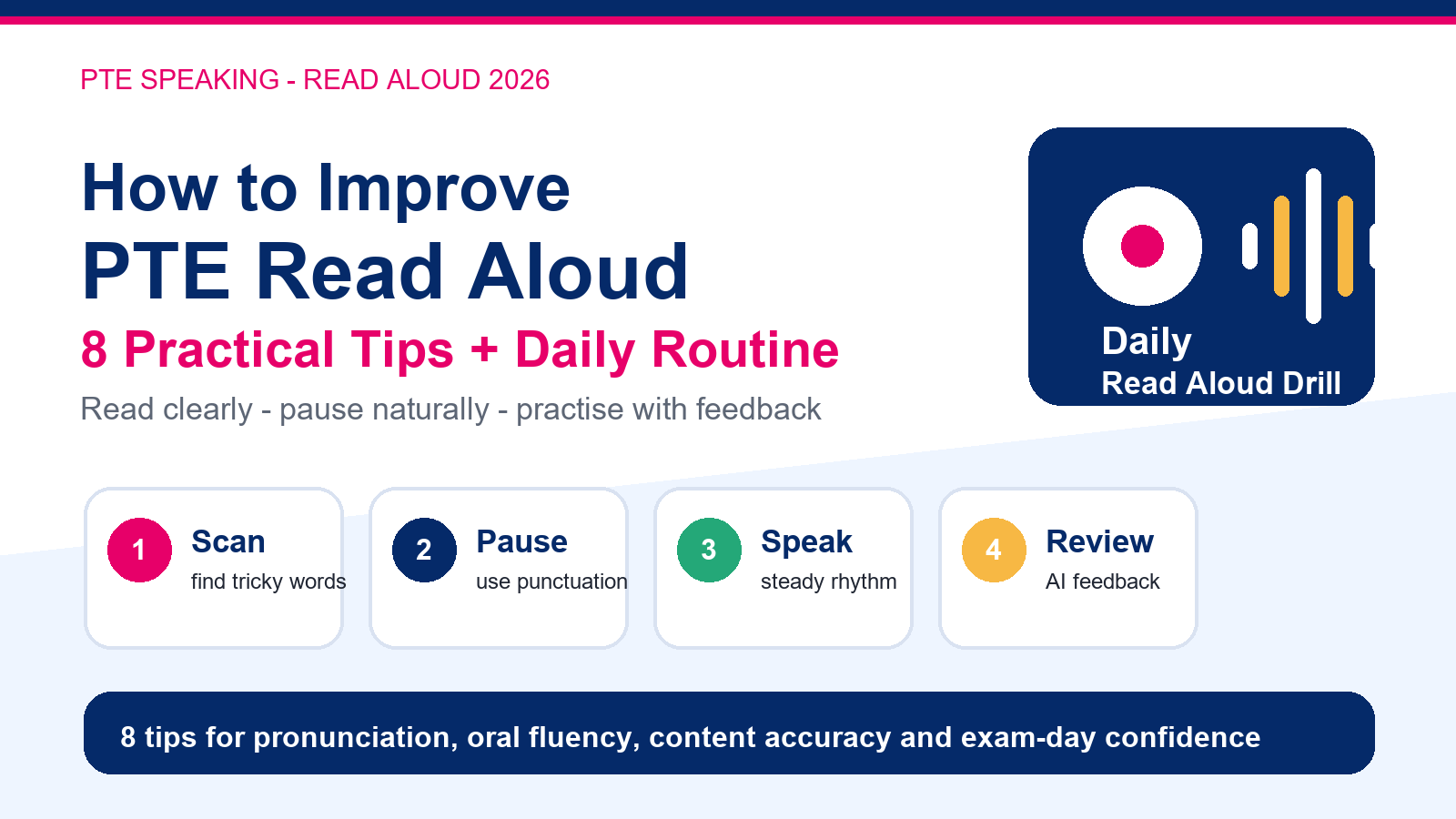
Improve Read Aloud with a simple system. Scan first, pause with punctuation, speak steadily, and review your performance with feedback.
Many PTE students practise Read Aloud by simply reading random passages again and again. That helps a little, but it is not enough. A better approach is to practise with a clear method: prepare the passage, control your pace, speak naturally, and review your mistakes.
In PTE Academic, Read Aloud shows a short text on screen. You normally get 30-40 seconds to prepare before the microphone opens. Your response is judged through content, oral fluency, and pronunciation, so both accuracy and delivery matter.
Why Read Aloud Feels Easy but Scores Low
Read Aloud looks simple because the words are already in front of you. The problem is pressure. When the timer starts, students often rush, skip word endings, pause in the wrong places, or restart after a small mistake.
8 Practical Tips to Improve PTE Read Aloud
PTE Ultra Read Aloud Practice Sample
Use practice screens like this to build exam rhythm. The goal is not only to read the sentence, but to practise preparation time, microphone timing, and confident delivery.
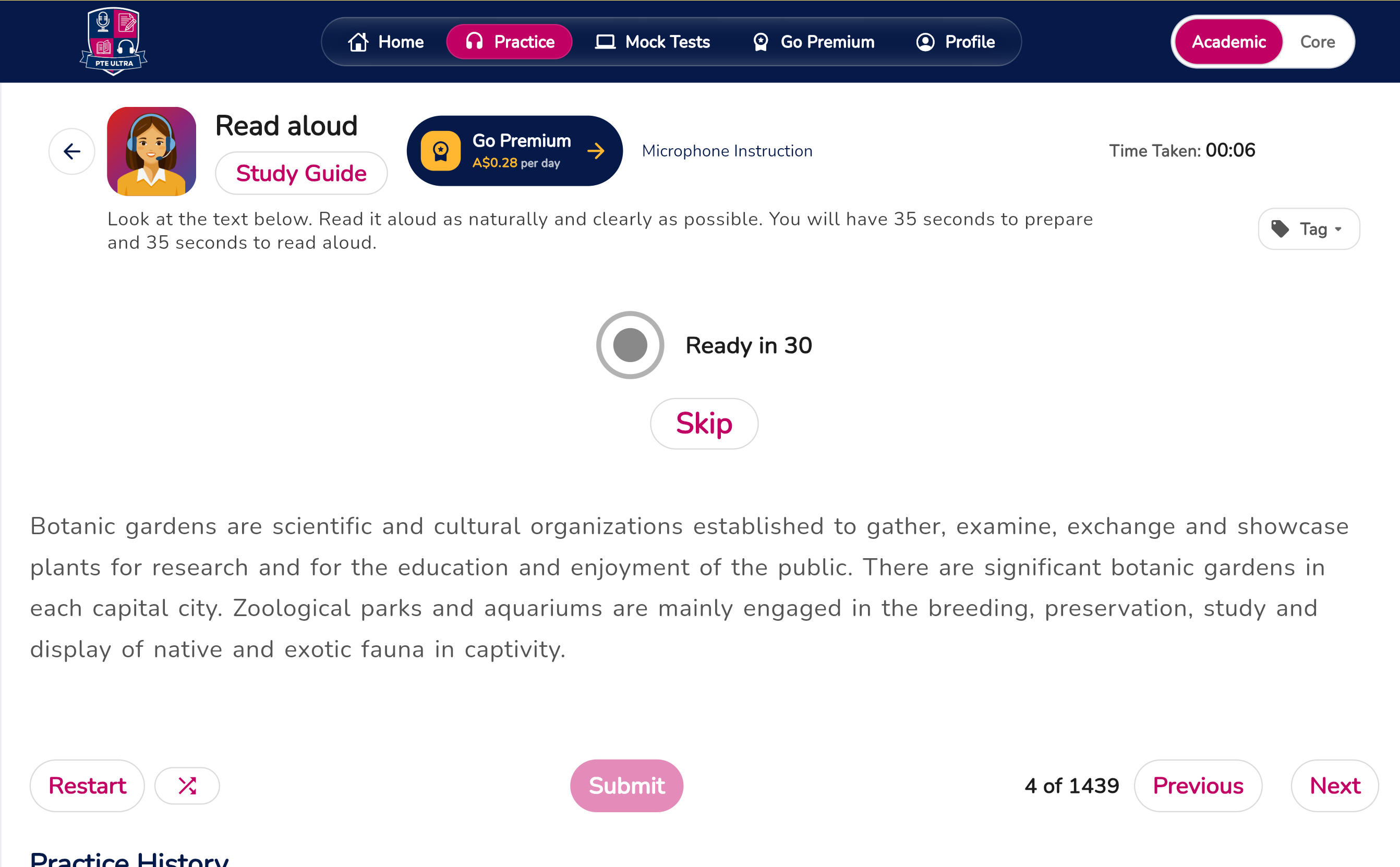
PTE Ultra sample: practise Read Aloud with exam-style timing and repeatable questions before test day.
A Simple 15-Minute Daily Routine
| Time | What to Do | Goal |
|---|---|---|
| 3 minutes | Read 2 short passages slowly and clearly | Warm up your voice |
| 5 minutes | Practise 4-5 Read Aloud questions with timer | Build exam rhythm |
| 4 minutes | Replay your weakest answer | Find fluency or pronunciation errors |
| 3 minutes | Repeat the same passage once more | Improve control immediately |
Sample Passage for Practice
Common Mistakes That Damage Your Score
- Starting before the microphone is ready.
- Reading so fast that words blend together.
- Pausing after every word instead of following punctuation.
- Skipping difficult words to protect fluency.
- Repeating the whole sentence after one small mistake.
- Practising without checking feedback or recordings.
Best Way to Practise
The fastest improvement usually comes from short, focused practice. Do not do 50 questions without review. Do fewer questions, check the problem, and repeat the same passage until your delivery becomes smoother.