PTE Read Aloud 2026: Format, Timing and Scoring | PTE Ultra
Learn the PTE Read Aloud format, timing, scoring areas, common mistakes, and how to practise with PTE Ultra in 2026.
PTEUltra.com
PTE Speaking - Read Aloud 2026 Guide
PTE Read Aloud 2026: Format, Timing and Scoring Explained
Read Aloud is one of the first scored speaking tasks in PTE Academic. Learn how it works, what Pearson expects, and how to practise it with a clear routine.
Read Aloud is a speaking task that rewards clarity. Prepare the passage, follow punctuation, speak once, and keep a natural rhythm from the first word to the last.
PTE Read Aloud looks simple: a short passage appears on screen and you read it aloud. But this task can strongly affect your speaking performance because it tests whether your voice is clear, fluent, and easy to understand.
For 2026 preparation, treat Read Aloud as a serious speaking skill, not just a warm-up. You need to read accurately, control your pace, pause naturally, and avoid restarting too much.
What Is PTE Read Aloud?
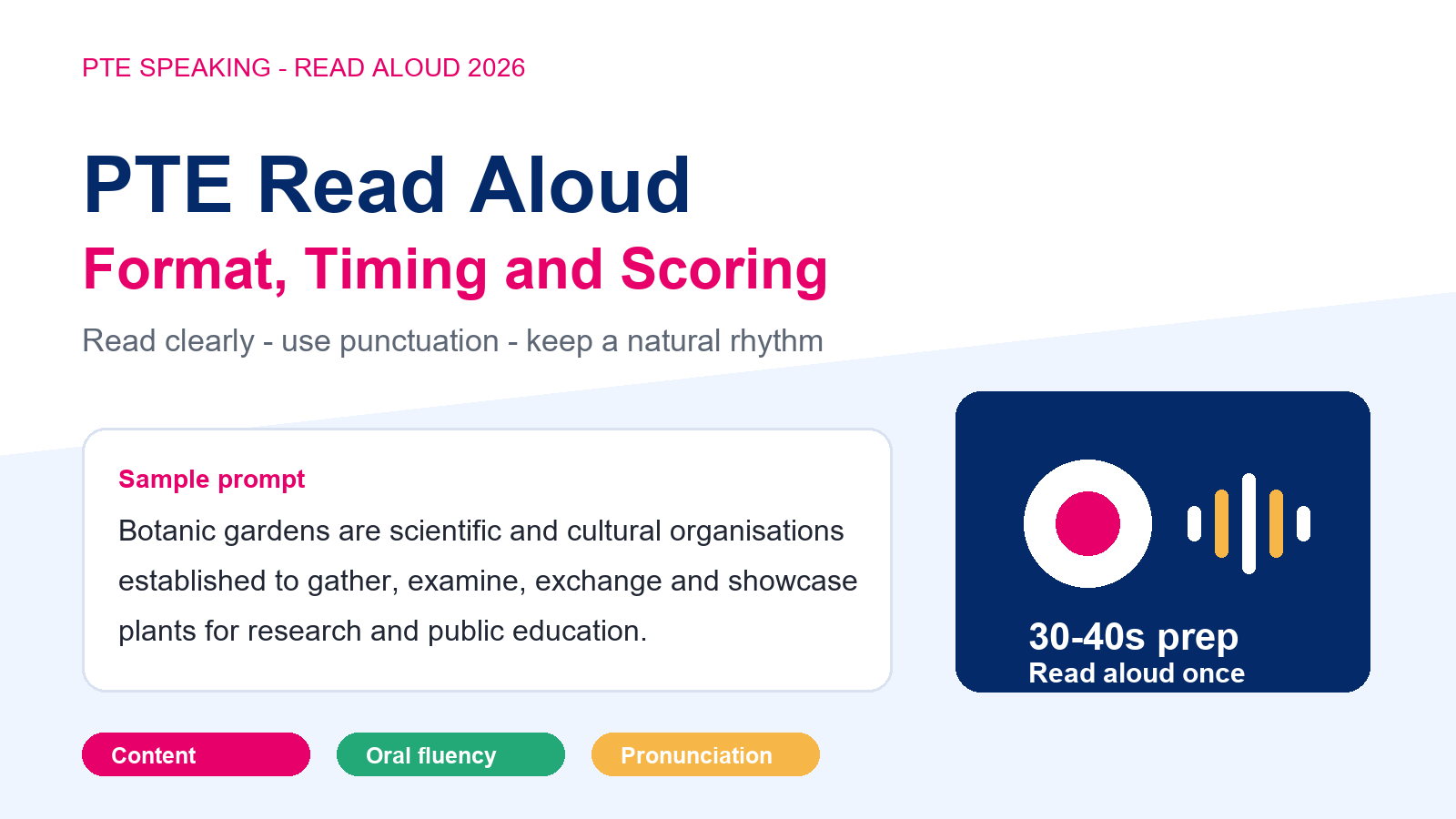
In Read Aloud, you see a short text on screen. You get time to read and prepare silently, then the microphone opens and you read the full passage aloud. Pearson lists this task in the Speaking & Writing part of PTE Academic.
| Feature | Read Aloud Format |
|---|---|
| Prompt length | Text up to about 60 words |
| Preparation time | Usually 30-40 seconds before recording starts |
| Your response | Read the text aloud once, clearly and naturally |
| Main scoring areas | Content, oral fluency, and pronunciation |
| Best practice focus | Accuracy, rhythm, punctuation, and confidence |
How Read Aloud Is Scored
Read Aloud is not about sounding dramatic or using a fake accent. It is about reading the passage accurately in a voice that is easy to follow.
PTE Ultra Read Aloud Practice Sample
On PTE Ultra, students can practise Read Aloud with exam-style prompts, timing, and AI feedback. The goal is to build the same rhythm you need on test day.
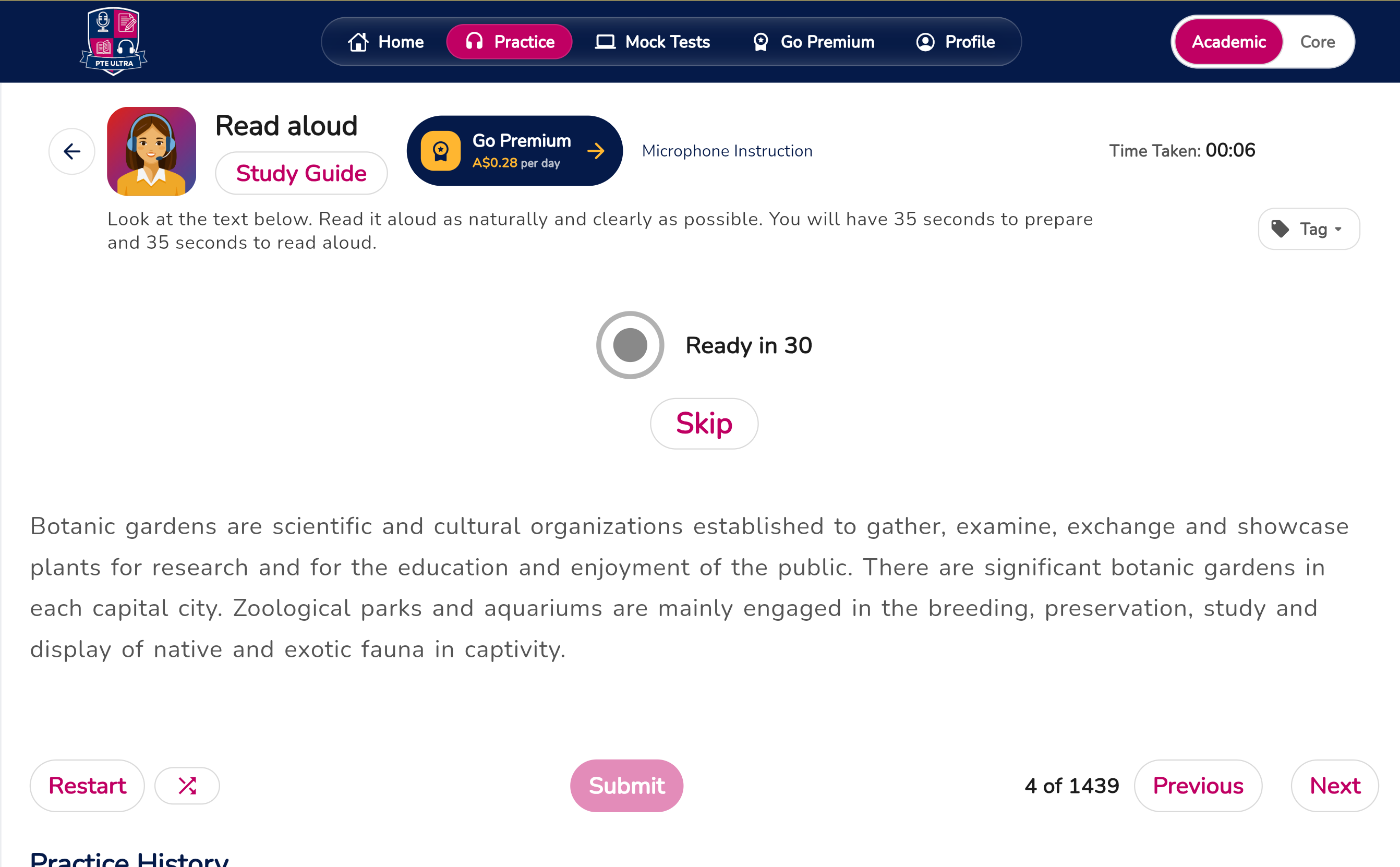
PTE Ultra sample: practise Read Aloud with a preparation timer, microphone flow, and repeatable exam-style questions.
A Simple Read Aloud Routine
Common Mistakes to Avoid
- Reading too fast and losing word endings.
- Stopping after every word instead of following punctuation.
- Restarting the whole sentence after one small mistake.
- Speaking too softly or too far away from the microphone.
- Ignoring difficult words during preparation time.
- Practising without feedback and repeating the same mistakes.
What Should You Practise Next?
Read Aloud is a perfect starting point for speaking preparation. Once your pace and clarity improve, move into Repeat Sentence, Describe Image, and Retell Lecture practice.